Stop chasing spreadsheets. Manage drivers, vehicles, and safeguarding checks in one secure, real-time platform — and never let a compliance failure put your contract at risk.
Compliance Transport closes the communication loop between councils, transport operators, and drivers — automatically. No chasing. No missed renewals. No excuses.
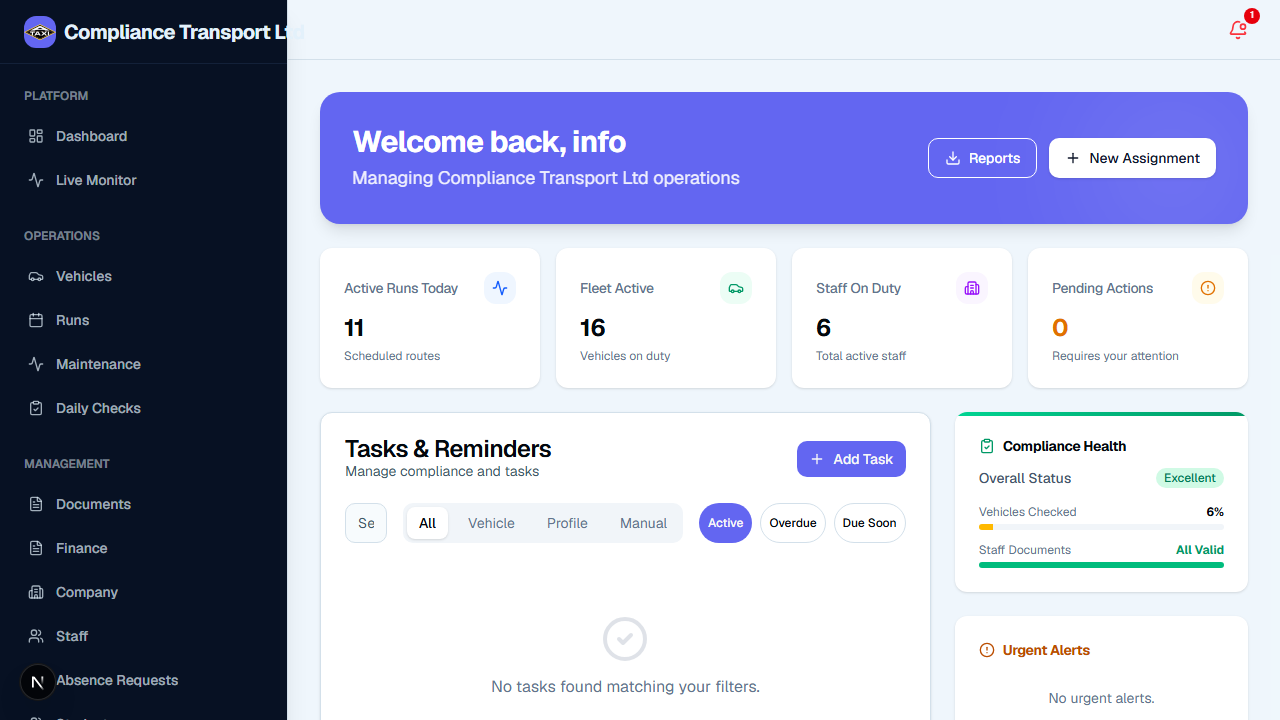
Councils gain a single dashboard showing the compliance status of every operator, vehicle, driver, and route in real time. When something is about to expire — or already has — the platform flags it automatically.
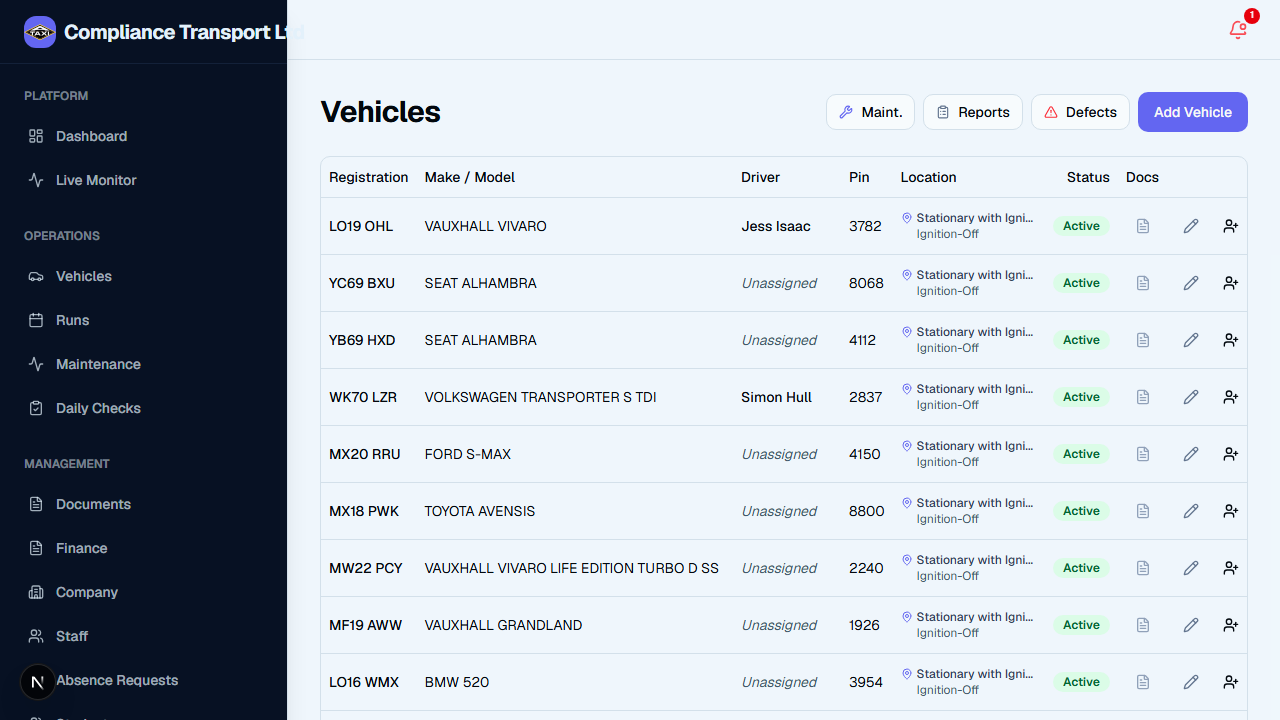
Private hire firms and coach operators use Compliance Transport to stay perpetually compliant — so a lapsed MOT or expired DBS never costs them a council contract. The platform replaces folders, spreadsheets, and checklists entirely.
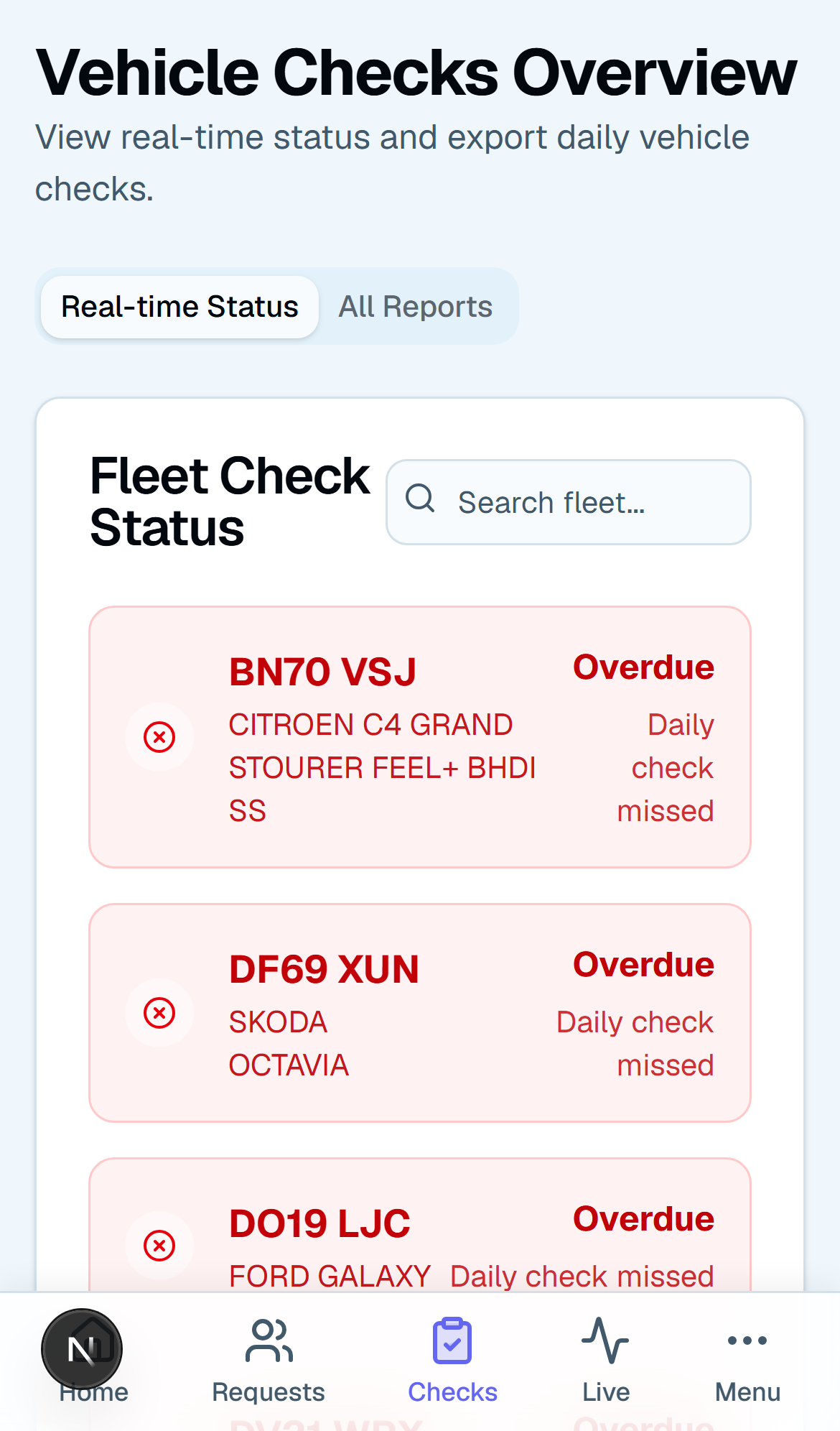
Drivers complete digital daily walkaround checks, log attendance, and report incidents directly from their phone — feeding data straight into the operator's and council's dashboard in real time.
Parents gain a dedicated portal to log upcoming student absences directly into the system. The driver's manifest and route are updated instantly, eliminating wasted journeys and angry phone calls.
When a driver logs a defect during their walkaround check, it instantly appears in the Mechanic Portal. Workshop staff can track, repair, and sign off defects digitally, immediately updating the vehicle's compliance status.
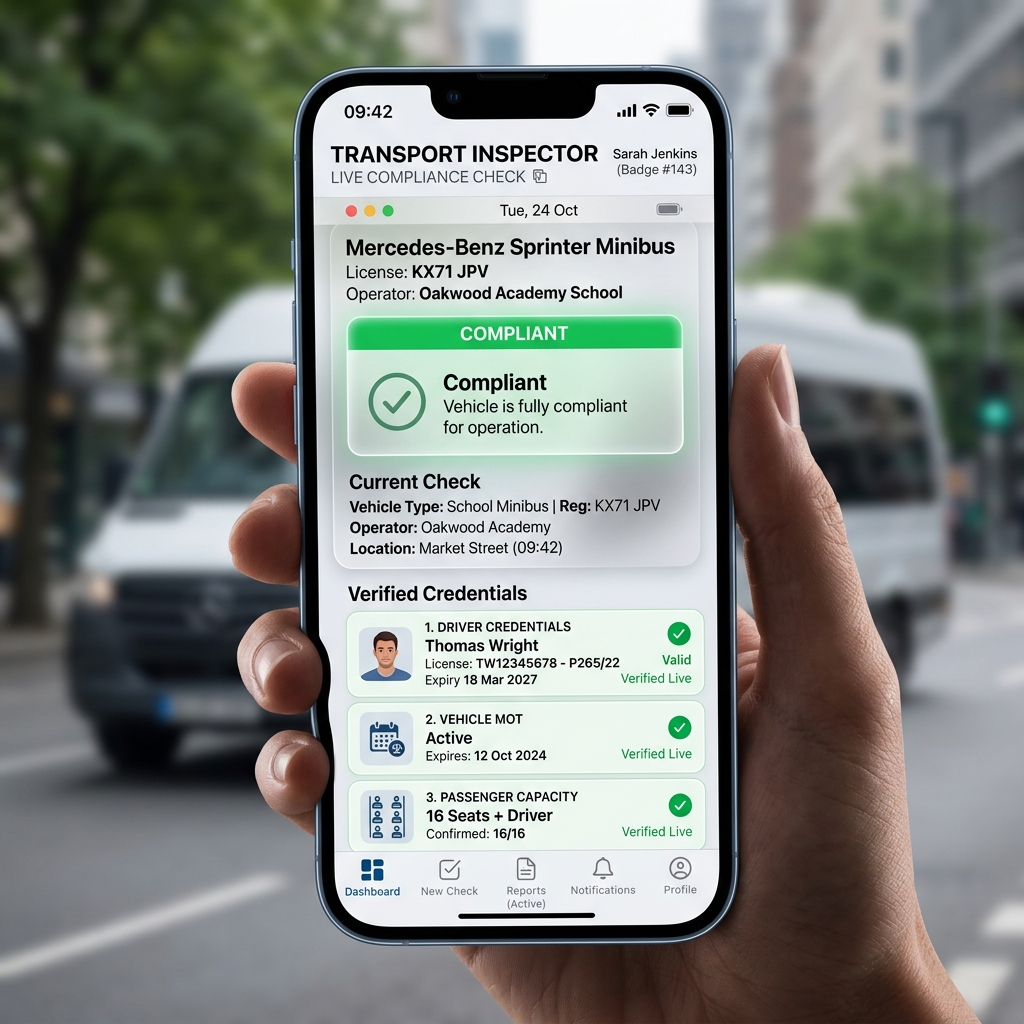
Council enforcement officers conduct on-the-spot field checks to verify vehicle compliance, driver credentials, and passenger capacity instantly from their mobile device.
Compliance Transport is built around one principle: a safeguarding lapse, an expired document, or an unsafe vehicle should be impossible to miss.
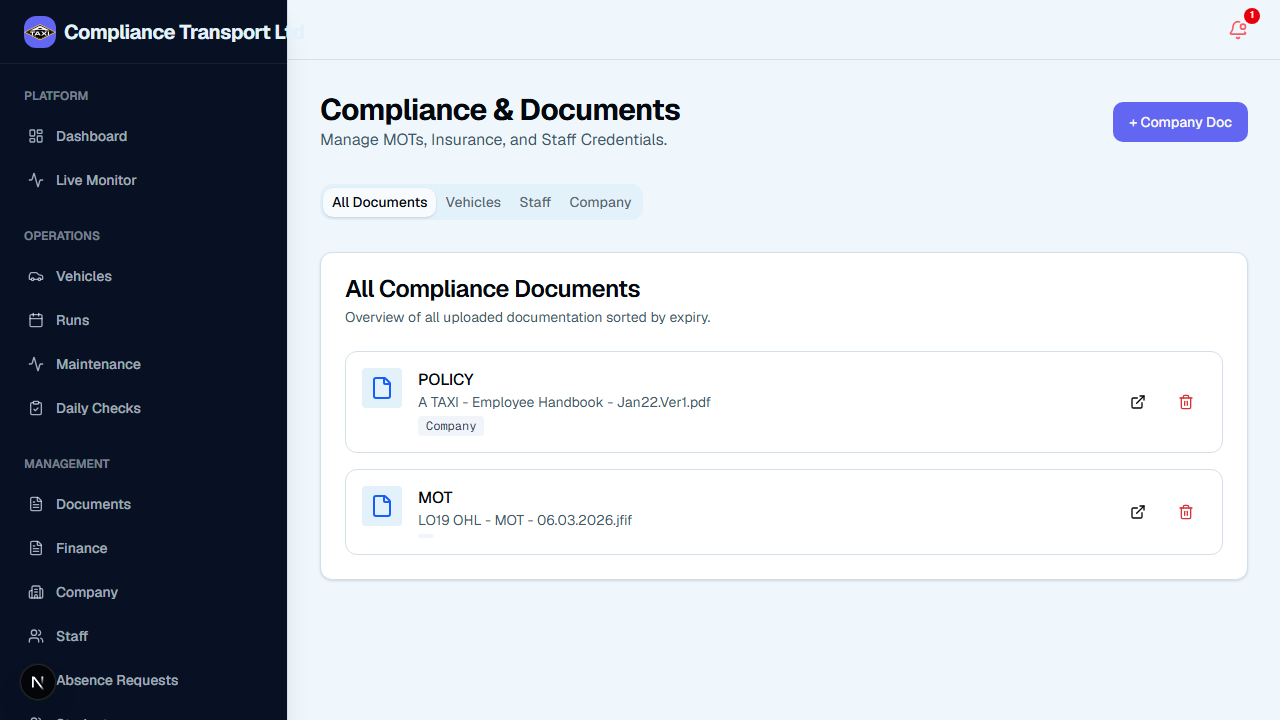
One expired O-Licence or lapsed insurance policy can suspend an operator's entire council contract. Compliance Transport eliminates that risk by tracking every critical document across your supply chain and escalating issues before they become crises.
A driver with an expired DBS or an unvetted passenger assistant should never be dispatched on a SEND route. Compliance Transport makes that scenario impossible by locking out unqualified personnel before they reach the vehicle.
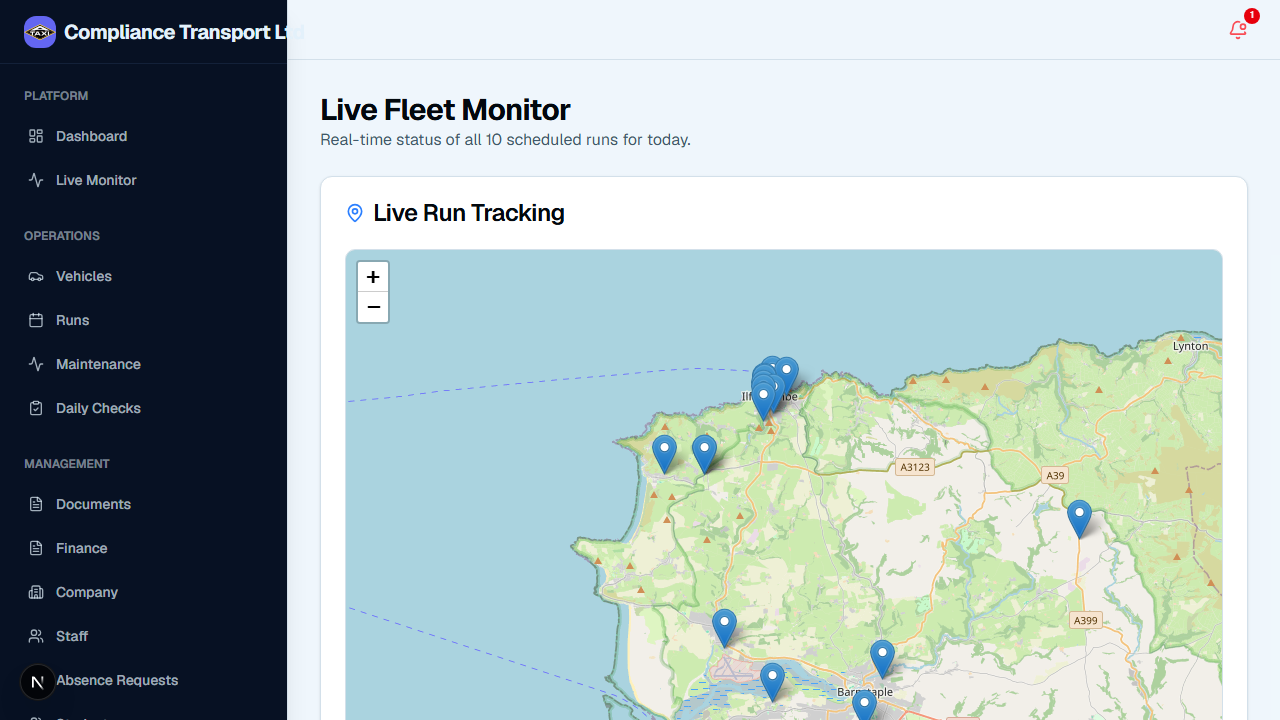
When a pupil doesn't board, or a driver reports an incident on route, every second counts. Compliance Transport gives councils and operators a live operational picture — so the right people are notified instantly and response times are measured in minutes, not hours.
A vehicle with an unresolved defect or expired MOT being dispatched on a school run is both a safeguarding failure and a legal liability. Compliance Transport removes that possibility entirely by connecting your drivers, workshop, and council in a single, automated enforcement loop.
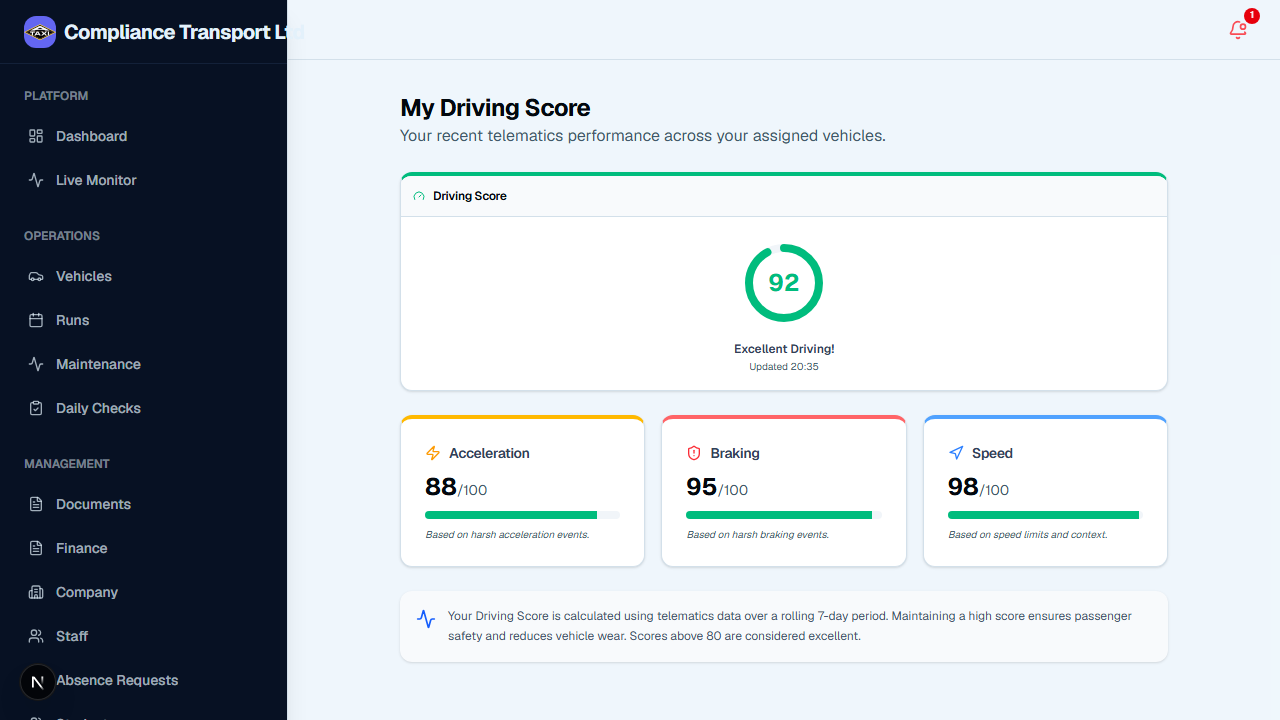
Passenger safety isn't just about documents; it's about how the vehicle is driven. Compliance Transport integrates directly with Quartix telematics to monitor driving style in real time, scoring drivers based on acceleration, braking, and speed limits.
Manual data entry leads to fatal safeguarding errors. Our AI OCR (Optical Character Recognition) engine automatically reads and extracts data from uploaded compliance documents, ensuring absolute accuracy.
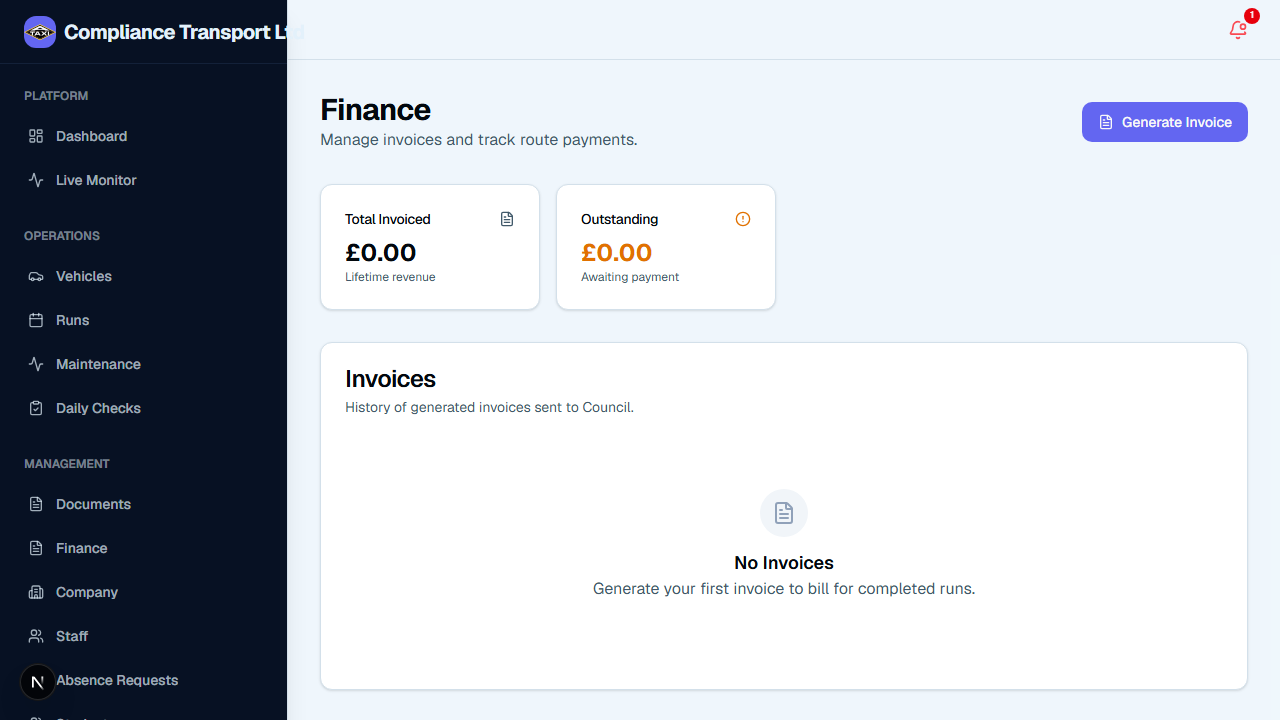
Stop disputing transport invoices. Because Compliance Transport tracks every run, passenger boarding, and route completion in real time, billing becomes entirely automated and indisputable.
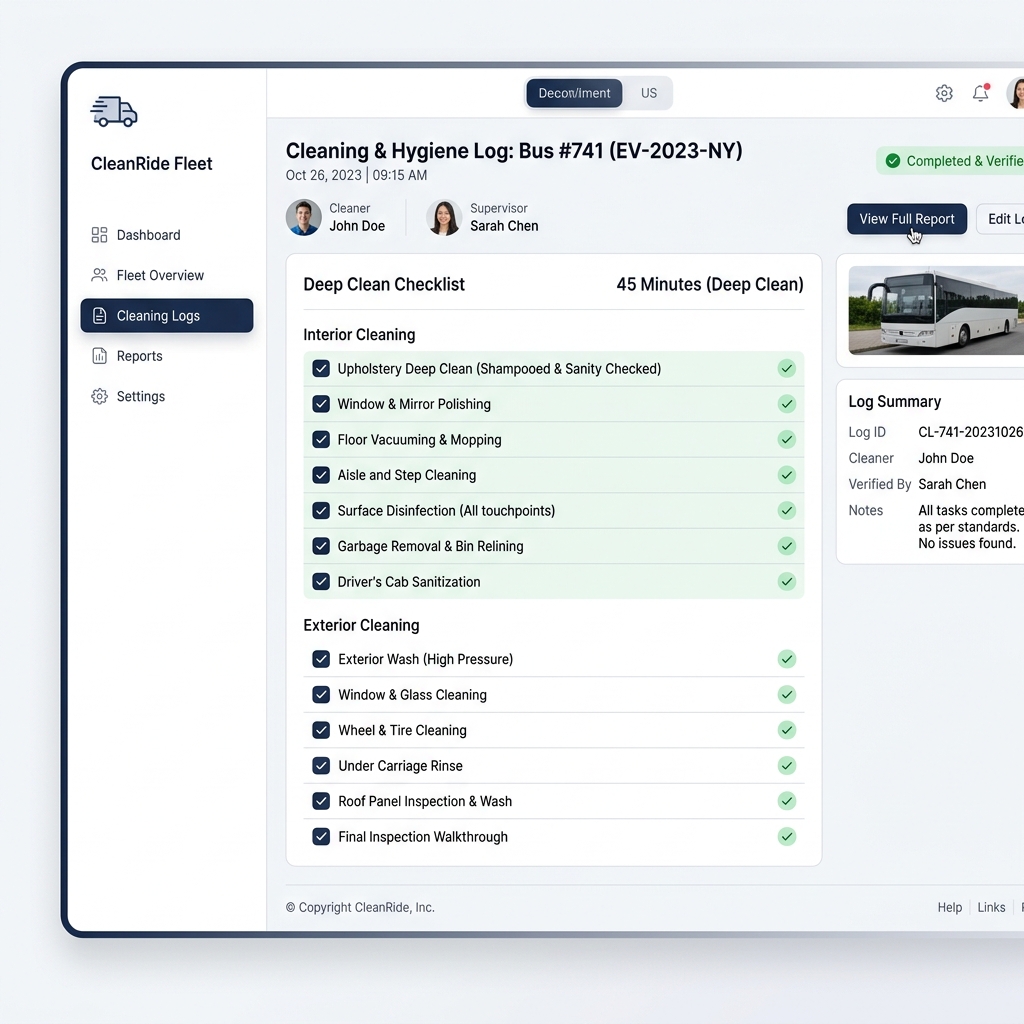
For SEND transport, vehicle hygiene is critical. Compliance Transport includes a dedicated sanitation tracking module, requiring drivers to log interior and exterior cleaning with time durations and checklists.
Compliance doesn't just live on a dashboard. Council inspectors can verify vehicle legality, driver credentials, and passenger limits instantly from the roadside using the Inspector Mobile App.
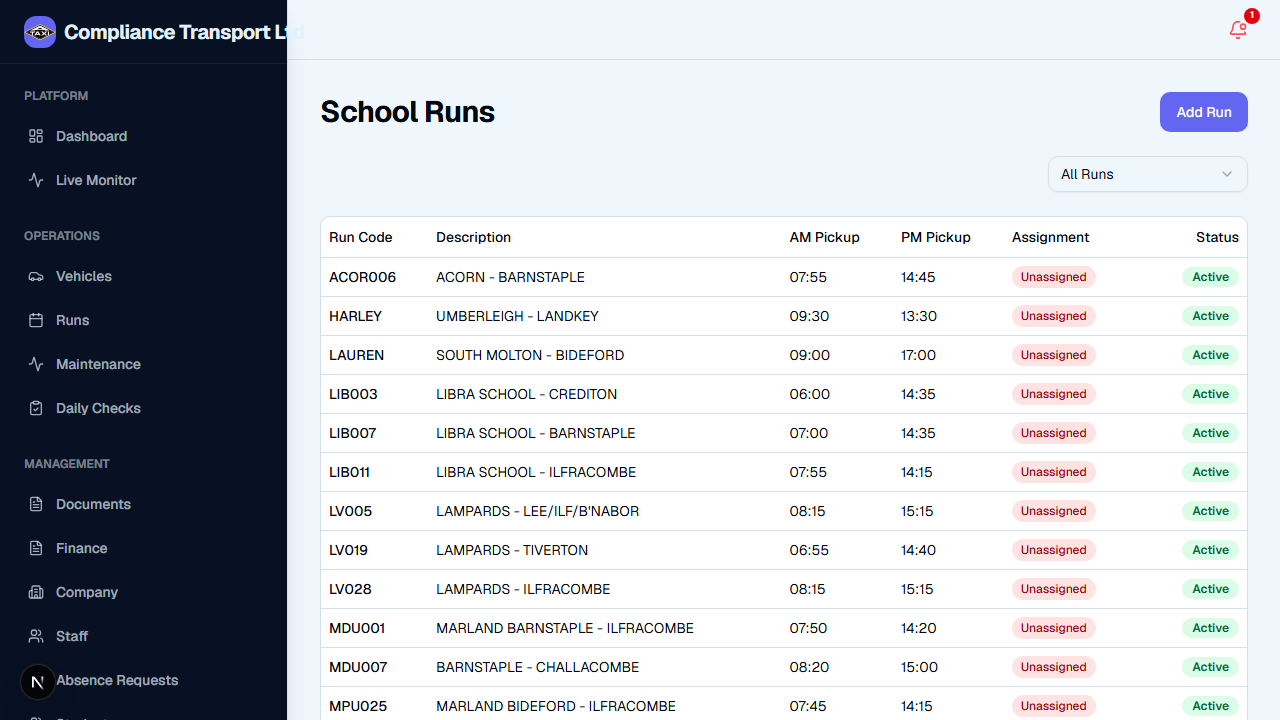
A clean, logical dashboard designed for the daily workflows of Local Authority transport assessors, contract managers, and operators — no training manual required.
Generate comprehensive, timestamped compliance reports in seconds for Ofsted inspections, DfE audits, or internal council reviews — with a complete chain of evidence.
Manual compliance checks, email chasers, and spreadsheet updates are replaced by automated workflows — freeing your team to focus on service delivery, not data entry.
Enforce a uniform standard of operation across every provider — from sole-trader taxi firms to large coach companies. One platform. One standard. No exceptions.
Our platform is built on enterprise-grade architecture. We don't just rely on the app to hide sensitive data; we use Row Level Security (RLS) deep within the database to mathematically guarantee that users can only access information explicitly assigned to their company and role. All data is encrypted both in transit and at rest, and critical operations are strictly verified on secure servers.
"Our database actively blocks unauthorized access at its absolute core, rather than just hiding things on the screen."
The Why: The system uses PostgreSQL Row Level Security (RLS). This means that security rules are baked directly into the database engine. Even if a malicious actor somehow bypassed the website's frontend, the database physically will not return data (like a student's address) unless the request comes from an authenticated user whose exact company_id matches the data. A driver for Company A is mathematically walled off from Company B's data.
"Staff can only see exactly what they need to do their job for that specific day."
The Why: Drivers and escorts don't have access to the full database of students. When a driver logs in, the server strictly checks their identity and only sends the specific run allocations assigned to them for that specific shift. Furthermore, destructive actions (like the "Delete Run" button) are locked behind server-side checks that verify the user is a manager before the code even runs.
"Sensitive operations happen securely on our locked-down servers, never in the user's web browser."
The Why: We use Next.js Server Actions. When a manager updates a route or a driver starts a run, the web browser doesn't talk directly to the database. Instead, it sends a secure request to our server, which double-checks the user's permissions, encrypts the request, and securely talks to the database using hidden credentials.
"We use industry-standard, encrypted login sessions that are highly resistant to hacking."
The Why: The app uses Supabase Authentication, which relies on secure, encrypted tokens (JWTs). Based on the database setup, the system is also built to support Passkeys, which are state-of-the-art, phishing-resistant login methods (using FaceID/TouchID) that are inherently safer than traditional passwords.
"All data is scrambled when traveling across the internet and when stored on our servers."
The Why:
In Transit: Every single piece of data sent between the phone/computer and the servers is encrypted using standard TLS/SSL (HTTPS).
At Rest: The Supabase database underlying the app is hosted on secure cloud infrastructure where the physical hard drives are encrypted at rest.
5 critical compliance gaps UK Local Authorities look for during Ofsted and DfE contract reviews. Protect your taxi firm from sudden contract suspension.